







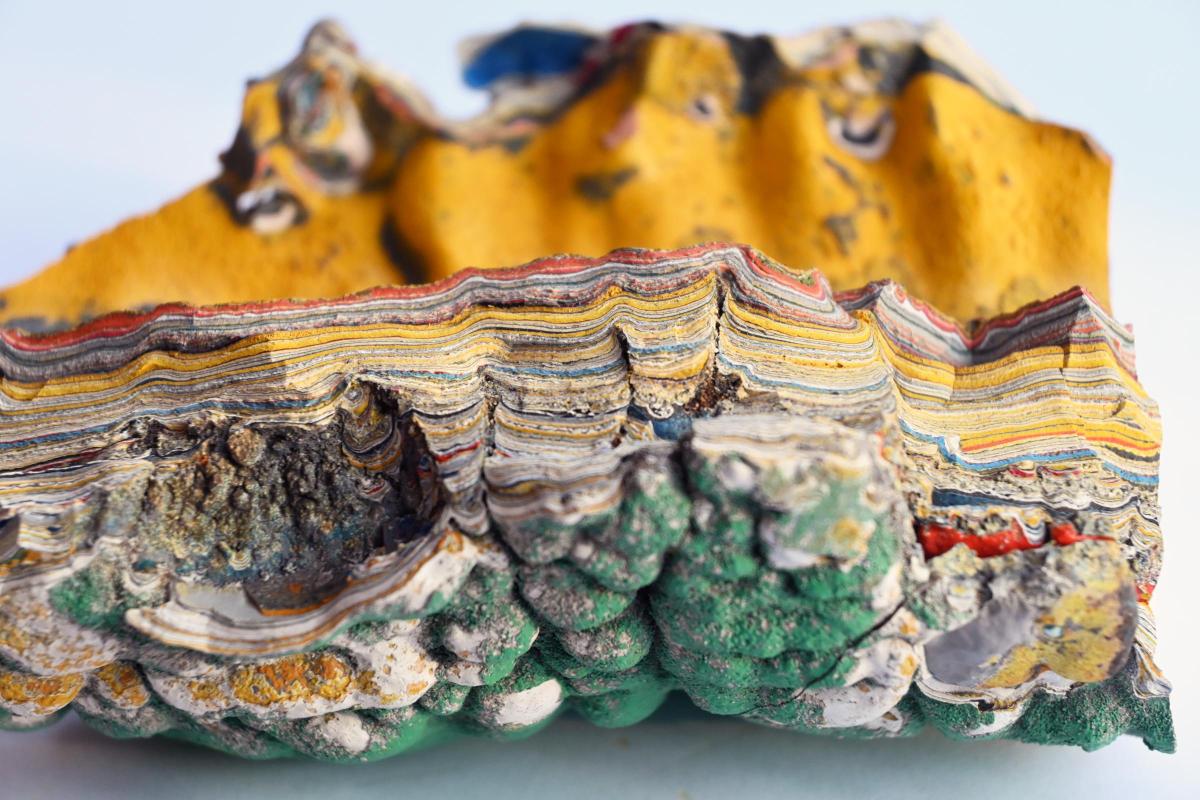

A landmark public artwork has been unveiled in east London to commemorate the women who helped change UK history.
The Dagenham Agates stands in Dagenham Green, east London, honouring the Ford Dagenham sewing machinists whose strikes in 1968 and 1984–85 paved the way for the landmark 1970 Equal Pay Act.
Created by artist Ruth Ewan, the sculptures resemble two 2.1-metre-high split boulders revealing agate-like bands of colour, with each layer individually crafted by local residents and students to represent each striker, using car paint colours from the strike era.

Read more
New 'alternative London plan' offers very different vision for the city's future
The Eastbrook - a pub rich in heritage at the heart of the community
Ms Ewan said: "It’s exciting to see the sculptures installed on-site. This is the work of many hands—just as the fight for equal pay was a collective effort, not an individual one.
"That collaborative spirit was at the heart of our process with students from Barking and Dagenham College, many of whom were discovering the achievements of these incredible women for the first time. Passing that knowledge on is vital—these stories must be remembered."

The sculptures were commissioned by not-for-profit housing association Peabody and housebuilder The Hill Group for Dagenham Green, a new neighbourhood under construction on the Ford Dagenham site that will eventually include more than 3,500 homes.

Inspired by "Fordite"—waste car paint once salvaged from the plant’s spray booths and fashioned into jewellery by workers—the artwork sits close to the original picket lines.

Justine Simons OBE, London’s deputy mayor for culture and the creative industries, said: "The Dagenham Agates are a wonderful new piece by artist Ruth Ewan. They tell a big story—of the Ford Dagenham Sewing Machinists, who took on the forces of inequality and won.
"Their determination changed the course of history, not just for Dagenham but for women across the country, helping bring in the Equal Pay Act 1970. It is an inspiring piece that reminds us of the power of culture to keep our stories alive in the heart of our neighbourhoods, as we build a better London for everyone."

Adriana Marques, Peabody's assistant director of cultural programming and strategy, said: "Initiatives and commissions such as this should not be regarded as decorative add-ons, but as essential civic infrastructure.
"We often think about roads, homes and public spaces as the building blocks of a new neighbourhood. But stories, heritage, culture and creativity are part of the infrastructure too."
Dagenham Green’s street names also reflect its heritage, including Rose Boland Avenue, Vera Sime Street, Gwen Davis Way, and Eileen Pullen Walk—each named in honour of leaders from the historic strikes.


Share